


Not because blogs are making a comeback or people are tired of social media. And definitely not because AI is suddenly going to replace creators.
I think it’s happening because it’s getting harder to answer one simple question: Who actually did the work?
For most of the last decade, the internet rewarded attention. Post more. Make it punchier. Learn what the algorithm wants. Your reputation and your reach were basically the same thing. That worked fine when putting something thoughtful online still took real effort. If someone had written twenty pieces over two years or documented a project through its ups and downs, there was a decent chance they had actually lived it.
Now that friction is mostly gone. A convincing thread is free. A polished landing page is free. A founder bio that sounds experienced is free. Even a portfolio that looks impressive can be put together quickly. The old signals of competence still exist, they’re just much easier to manufacture.
I saw this clearly while reviewing applications for builder programs and ecosystem initiatives. A lot of the writing started sounding the same. Same rhythm. Same polished intros. Same careful language. It wasn’t that the people were weak. Many were genuinely good. But it became harder to tell who had actually been through the thing they were describing and who had just gotten very good at sounding like they had.
This doesn’t create a trust problem so much as a history problem.
You can generate a strong present in a weekend. You can’t generate four years of real timestamps. You can’t fake an old blog post that actually led to a project, that led to a hackathon, that led to real people who remember working with you. You can’t fake the trail.
In a world drowning in content, history becomes the new signal
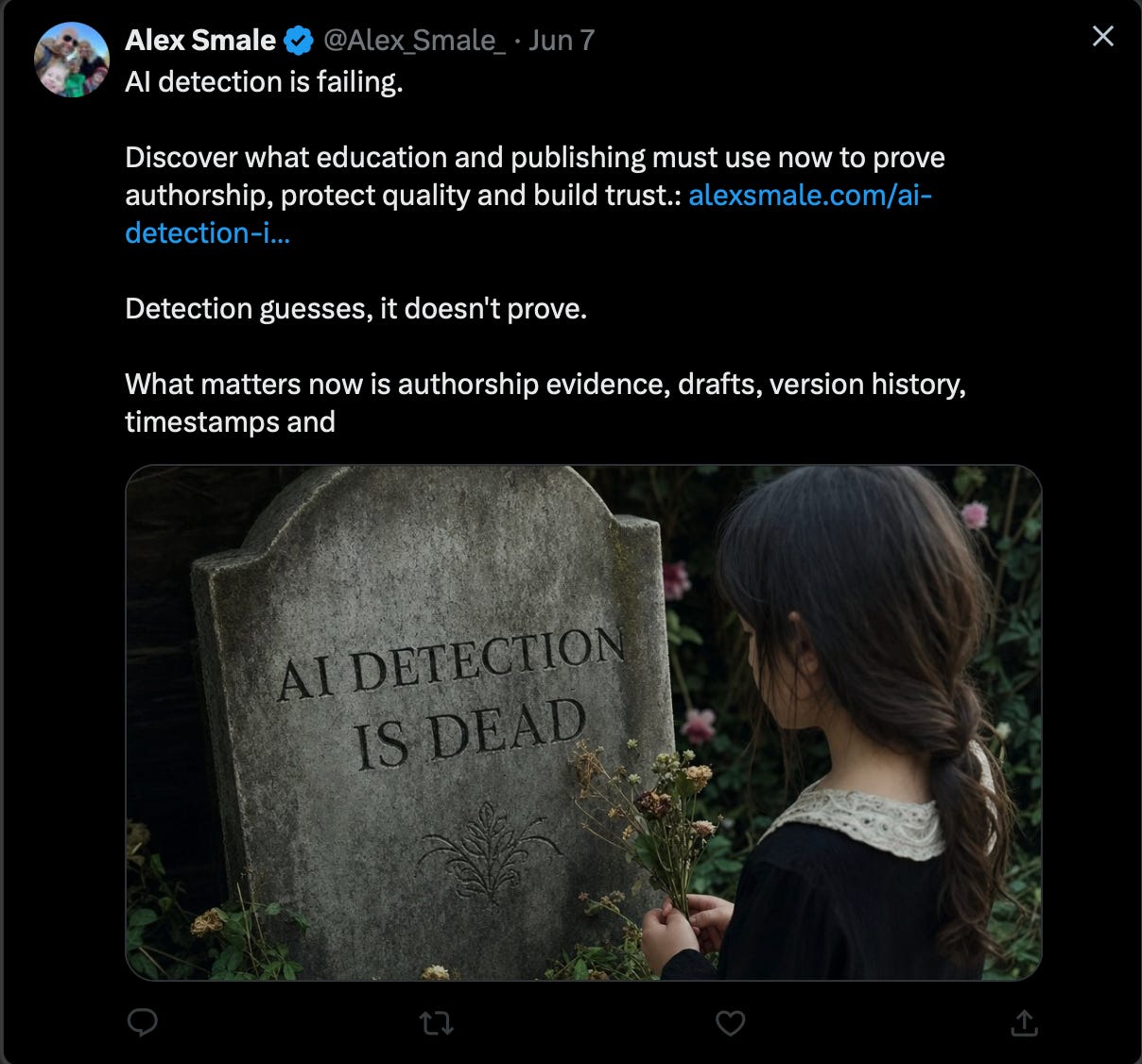
That’s why more people seem to be quietly going back to things that used to feel old-fashioned with personal domains, long-running blogs and proper archives. At first it looks like nostalgia. I don’t think it is. I think they’re rebuilding continuity.
The internet got extremely good at distributing ideas. It never got very good at helping us verify them.
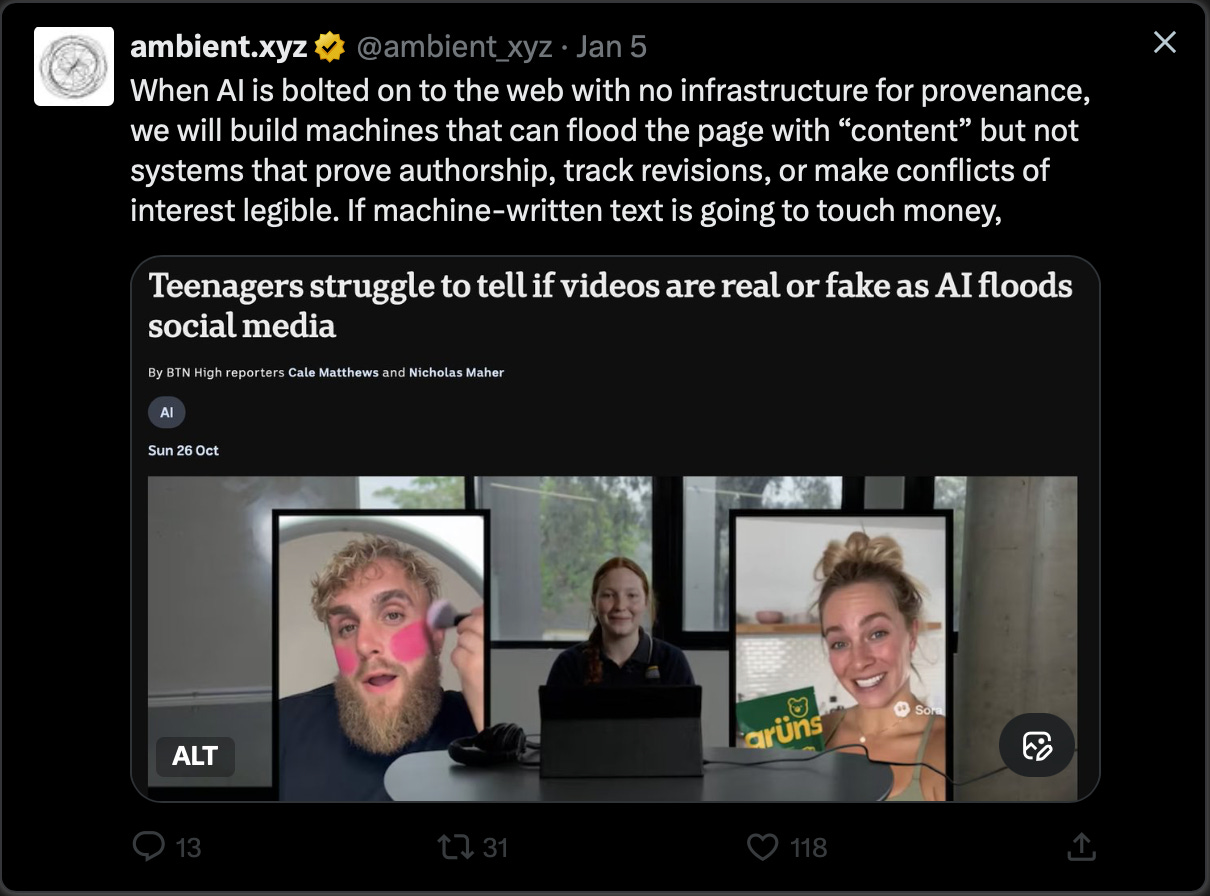
Social platforms are still the best place for discovery. They’re just terrible at keeping anything. Your best thread from 2023 can get buried when the ranking changes. A year of writing can effectively disappear if you stop feeding the machine for a while. The platforms are built for what’s happening right now. Trust is built by seeing what someone has actually been doing over time.
This is changing what a personal website is for.
For years we treated them like digital portfolios a clean landing page, a short bio, a few highlight projects. Basically a nicer version of a LinkedIn profile. That version feels less useful now. When I look someone up these days, I don’t just want the highlight reel. I want the record.
What were they writing about two years ago? What did they build that didn’t work? What communities were they actually part of? Can I trace the claims back to something real?
The value isn’t the design. It’s the continuity.
A personal site is still one of the few places where you can keep the full archive like the essays, the failed experiments, the old ideas you no longer agree with, the event notes, the actual work. None of it has to get buried because an algorithm decided it wasn’t engaging enough this week. It’s that it creates a visible chain of custody for your work.
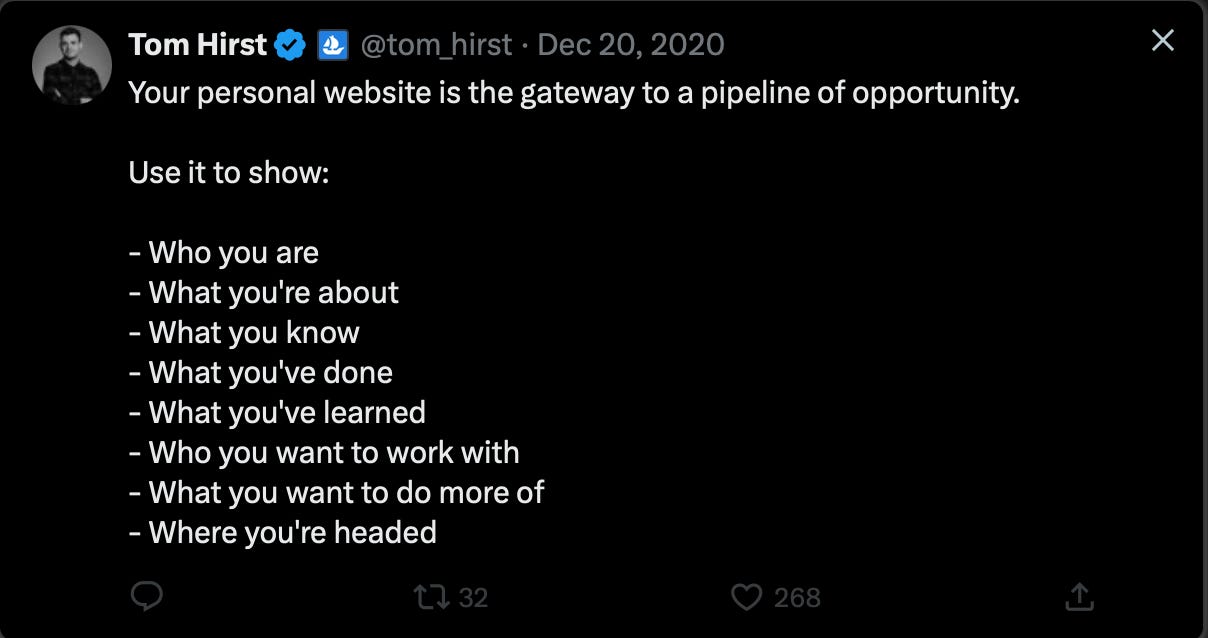
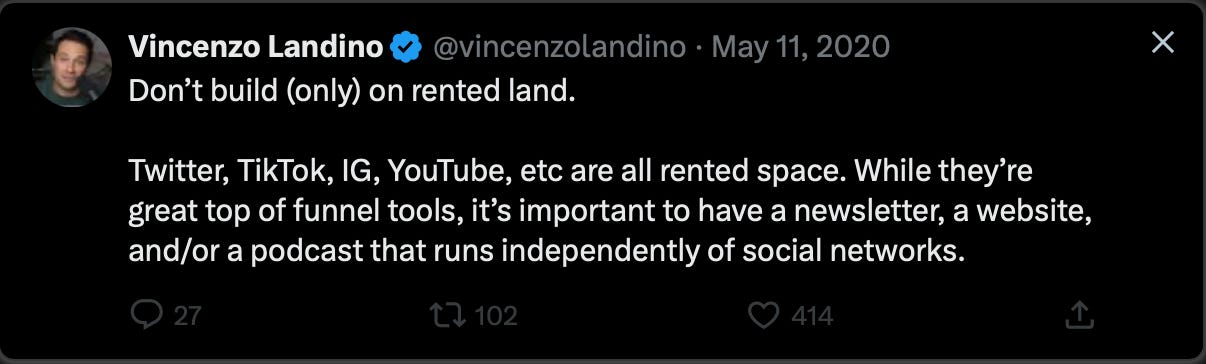
One-line explanation: Shows a respected builder framing the personal site as the practical place where your actual shipping history and work record lives.
You see this clearly with people like Pieter Levels, who runs levels.io more like a live ledger than a traditional portfolio. It shows project hit rates, revenue experiments, and the pattern of attempts over years. That kind of visible history is hard to fake or compress into a single polished page.
I’ve felt this especially in places like crypto and builder ecosystems, where a lot of the real work happens in Telegram groups, hackathons, conference hallways, and temporary teams. Some of the most valuable people don’t have the loudest profiles. They just have years of accumulated context that’s hard to see unless you can actually follow the trail.
Social platforms won’t disappear but they’ll become distribution.
Andrej Karpathy touched on something similar when he started recommending RSS feeds again. He pointed out that the longform writing there feels higher quality and has far less slop mainly because it comes with actual history attached.
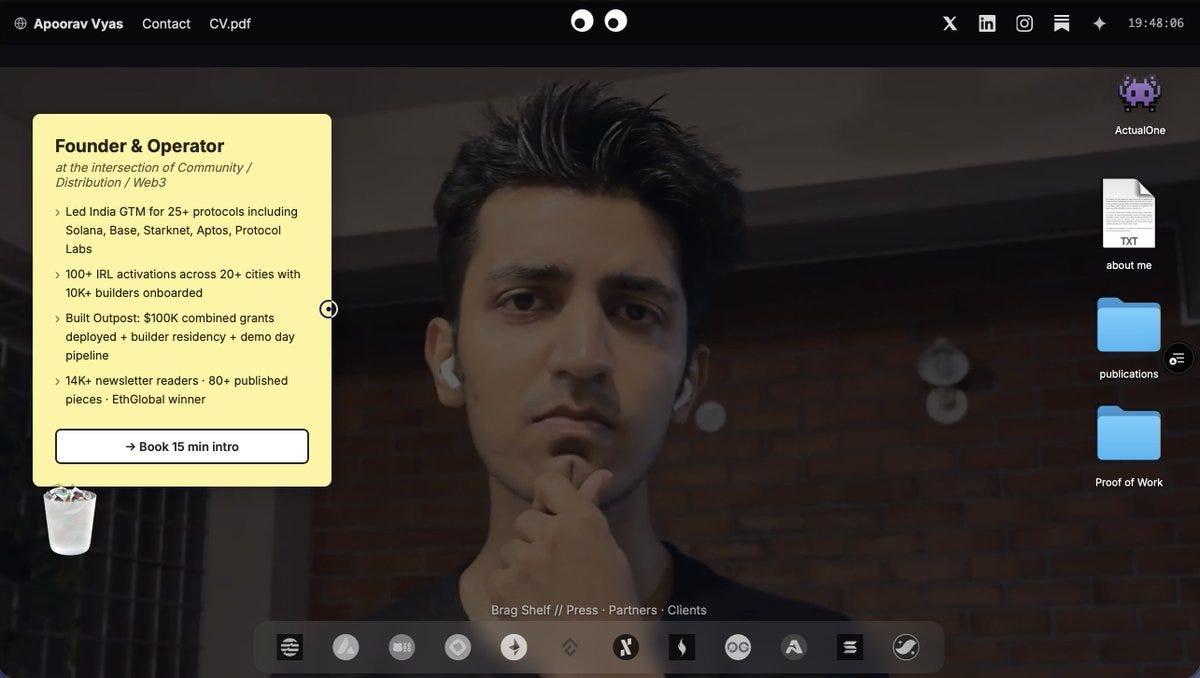
A few weeks ago I rebuilt my own site (apoorav.com) around this. Not as a portfolio, but as an archive. The talks link back to the actual events. Projects point to the real work behind them. Old writing stays up, even the pieces I’d probably write differently now. The goal isn’t to look polished. The goal is to leave a trail.
Because I have a feeling that over the next few years, the people evaluating work of founders, funds, hiring managers, even AI agents, won’t just be asking whether someone can produce content. They’ll be asking whether they can prove where it came from.
And I don’t think that answer lives inside a feed anymore.
I think it lives on a domain you actually own.