


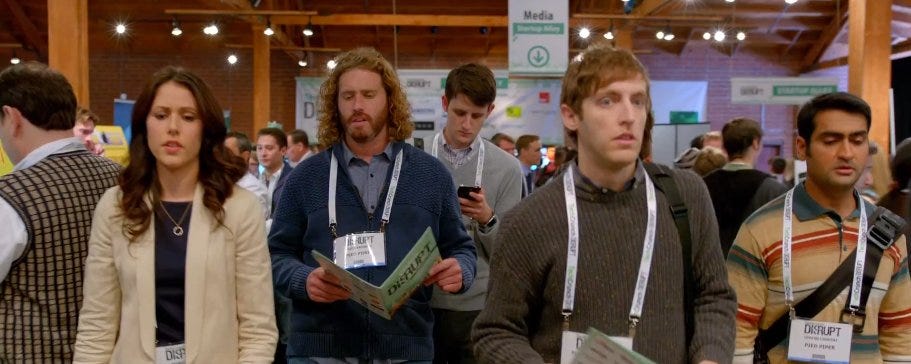
A few months ago a slightly ridiculous pattern started showing up in public job listings. Anthropic, OpenAI, Gamma and a handful of other AI companies were hiring Events Leads at salaries that looked like engineering offers. The comments were unconvinced. Nobody, people said, pays $300,000 to plan a party.
They were looking at the wrong part of the job. These companies were not paying for taste in venues. They were paying for someone who could decide who should be in a room, why those people would bother coming, and what might still be true about the group after everyone went home.
The stranger half of the story is who was writing the offers. The same industry filling the internet with generated text, generated faces and generated expertise was becoming oddly unwilling to trust that internet.
In September 2025 Sam Altman was reading Reddit posts praising Codex, a product he already knew was growing. He still assumed a lot of what he was seeing had been manufactured.
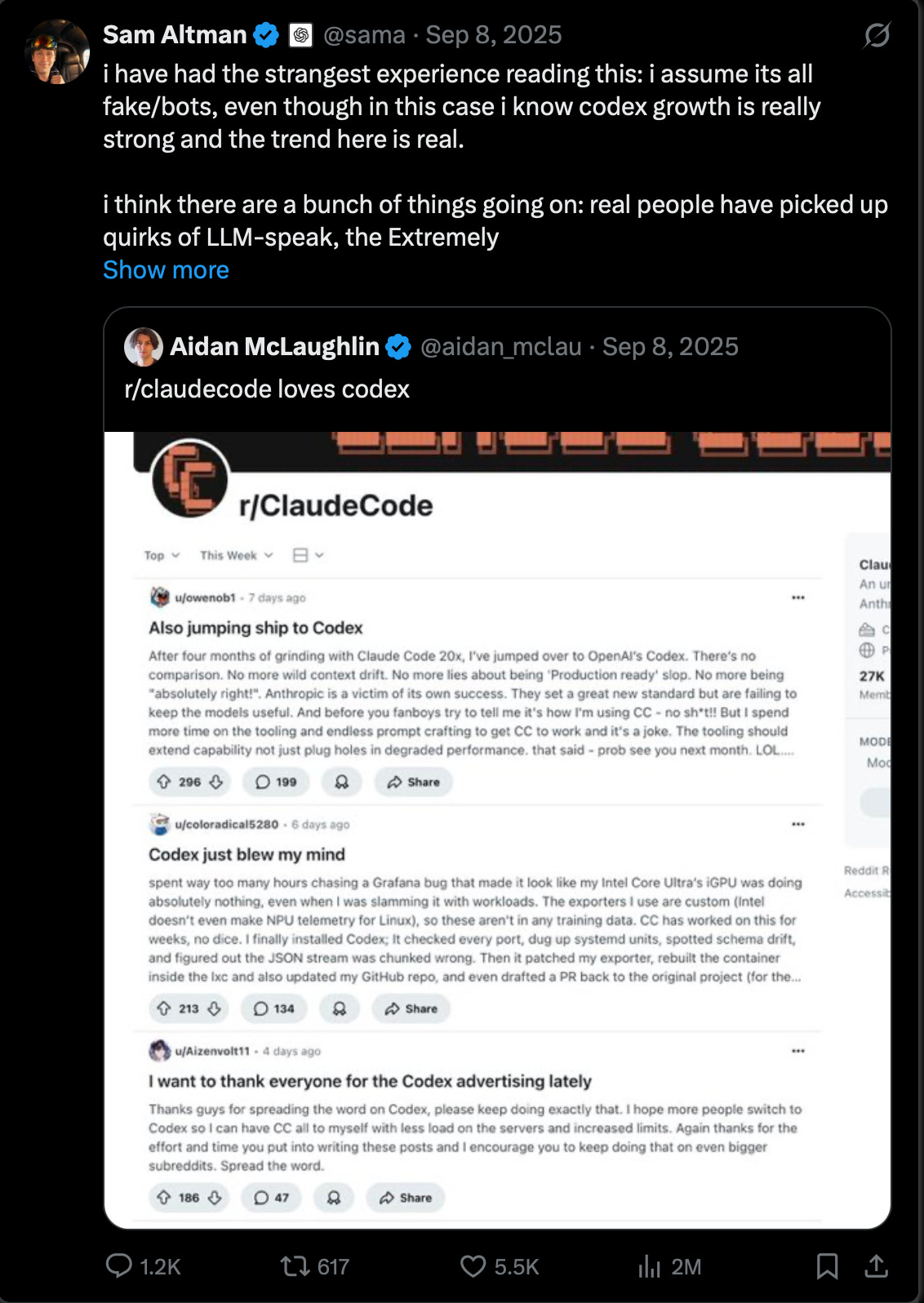
The person closest to the product cannot treat genuine praise as evidence.A few days earlier he had conceded something he used to wave away.

The mood around the feed shifts from conspiracy theory to ordinary observation.
The useful way to read those posts is not that the internet died. Most of it is still made by people. What changed is how cheap it became to look real. When a profile, a review, a thread or a reputation can be produced on demand, the genuine versions do not disappear. They just get harder to pick out of the pile. You start discounting things that happen to be true.
That discount has to land somewhere. Lately it has been landing on the parts of life that still take a body and a calendar: dinners that happen every month, run clubs, fellowships, builder houses, city weeks, the unglamorous habit of being in the same place as the same people more than once.
A room is a small thing until you notice what it leaves behind. Someone watches you explain an idea badly and then correct yourself. They see how you treat the person pouring drinks. They remember that the prototype actually worked. Later, when your name comes up, they are not repeating a bio. They are repeating an afternoon.
Sometimes that is enough to start something that looks, in hindsight, inevitable.
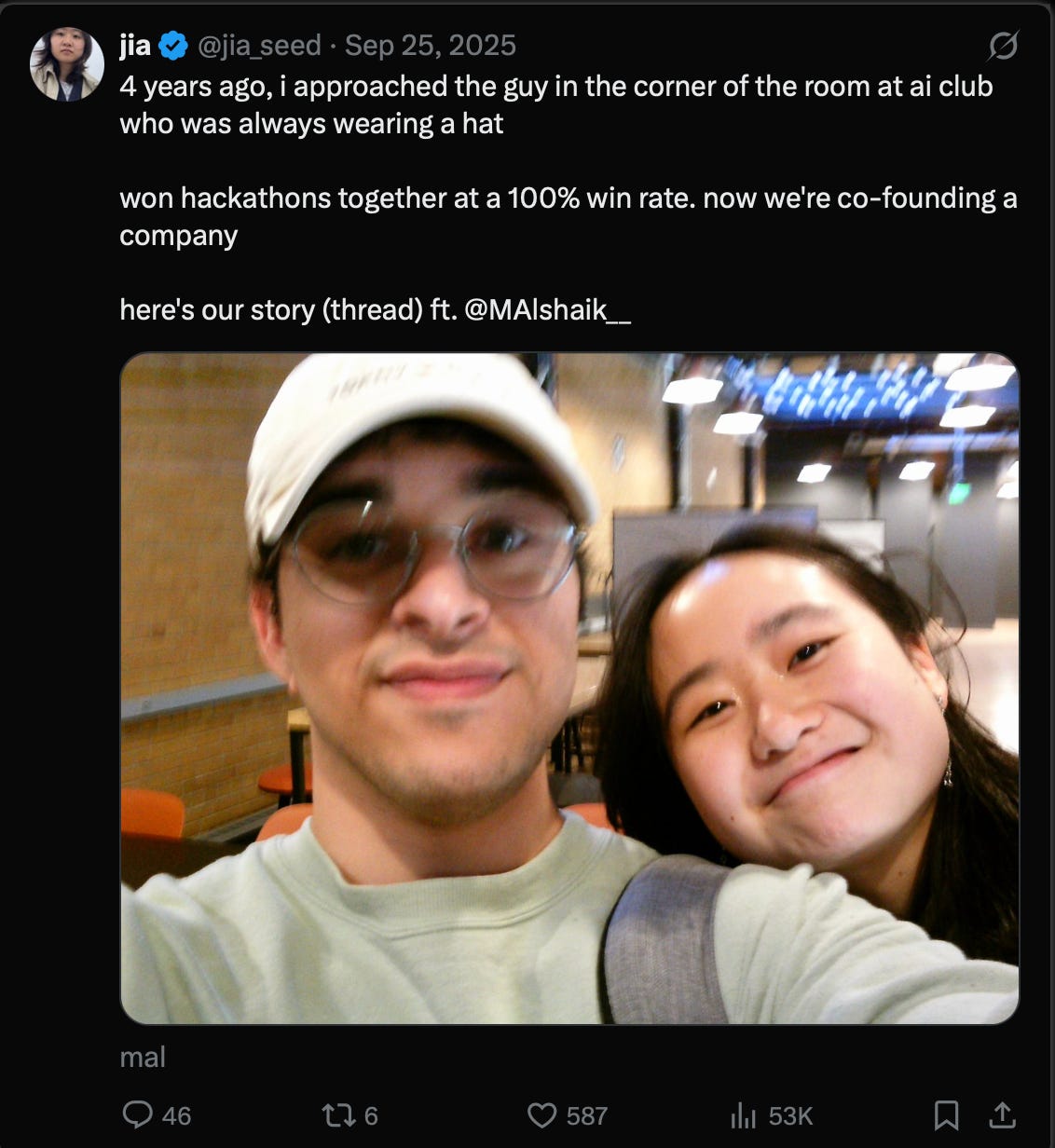
A specific corner of a specific room becoming a company.
This is why “networking” has always been a slightly wrong word. The useful gatherings are not contact-collecting machines. They are places where a relationship can begin and then continue in a group chat, a second dinner, a project that was not on the invite. The night itself is usually just the first frame. Attendance is easy to count. A collaboration that shows up nine months later almost never comes with a badge scan attached to it.
You can see the same bet in a more literal form. Funds and studios are no longer only writing checks. They are renting houses, covering meals, and paying for a few weeks in which a small number of people have to live with each other’s work.
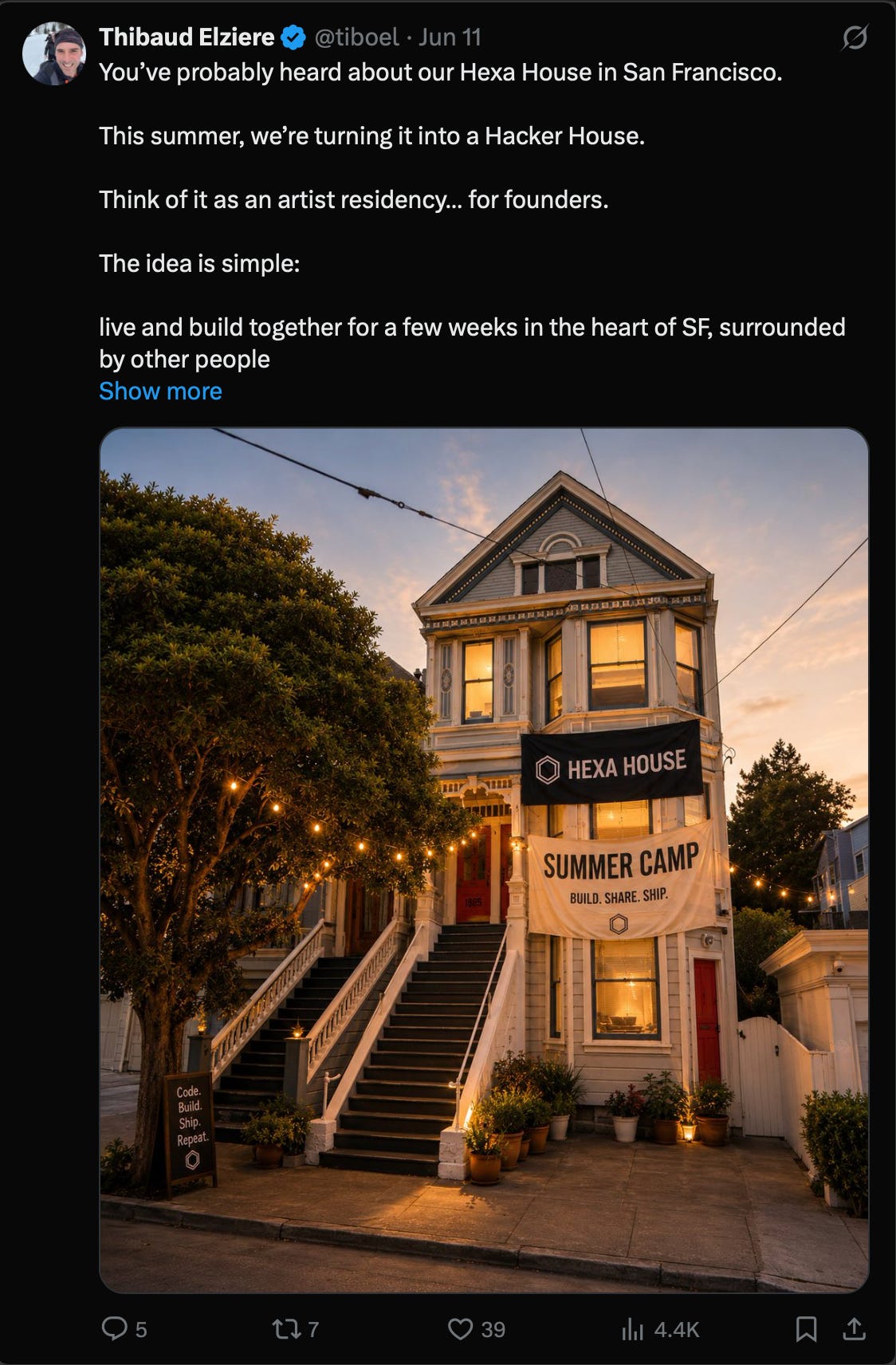
A fund spending real money to put eight or ten builders under one roof.
People who have actually done this tend to describe it without the strategy language. They talk about being less isolated, shipping faster, and then running the next house themselves.
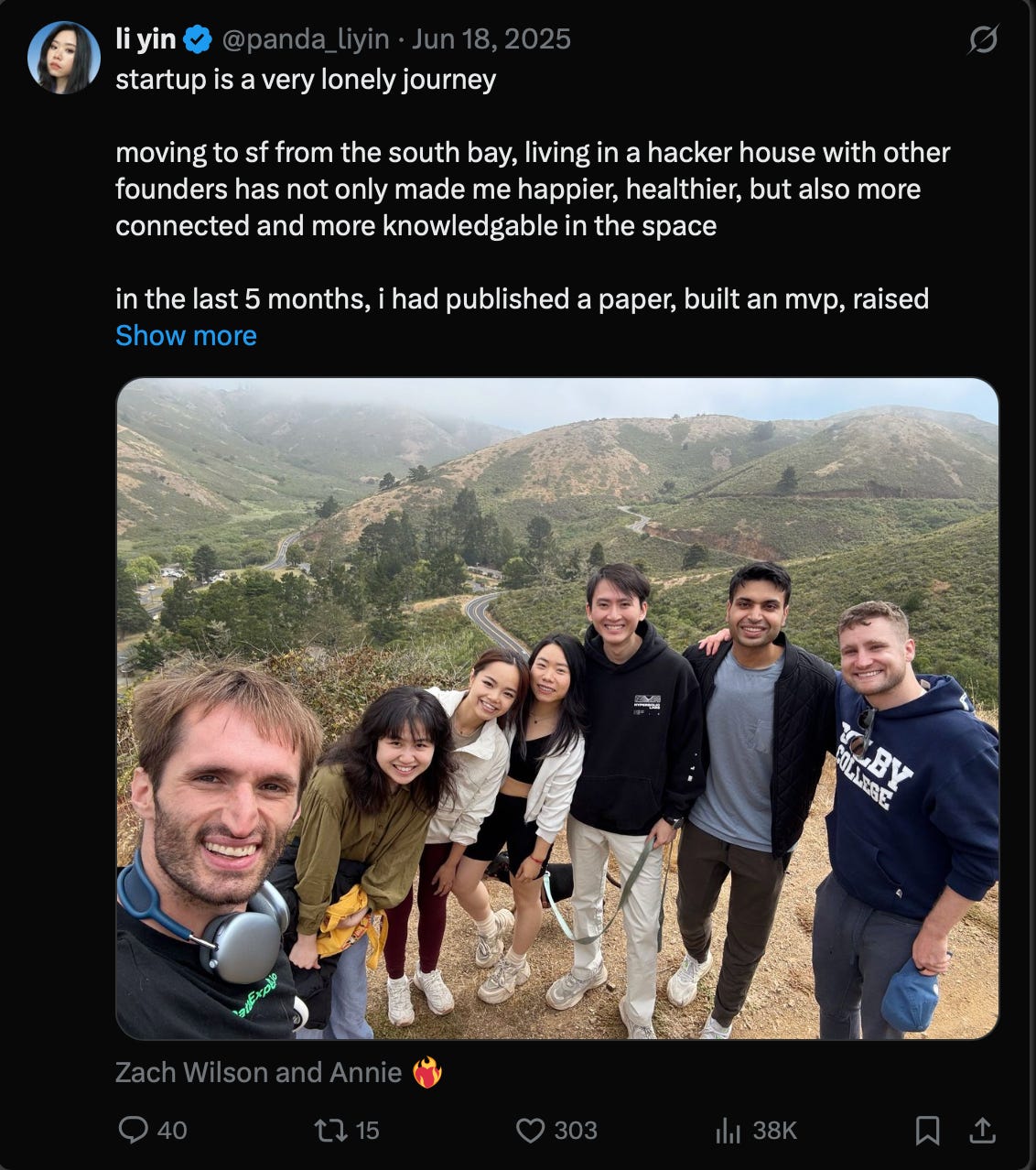
First person residue from living in a house, then operating one.
Cities keep mattering for the same unfashionable reason. A YC partner told a Paris founder this summer that moving to San Francisco was a weak idea if the goal was only fundraising. The more interesting effect was what the surrounding attempts did to the size of his own.
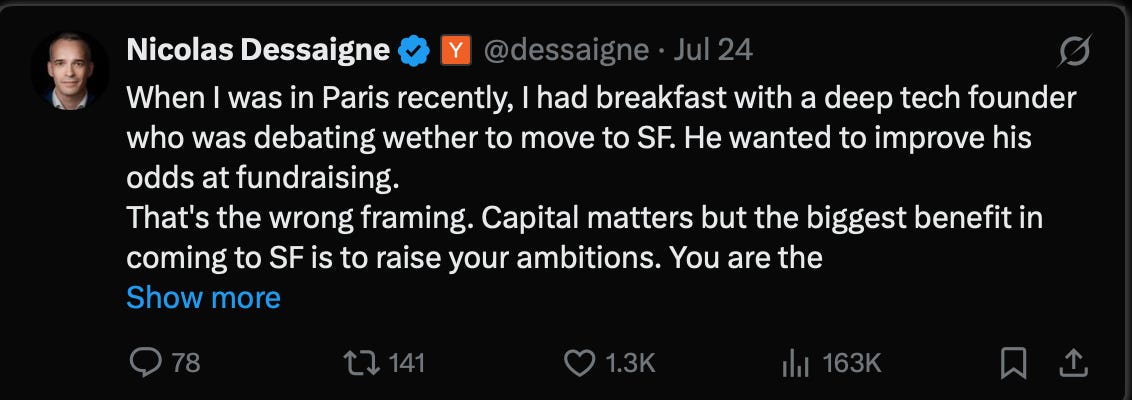
Proximity as a change in what people are willing to try.
None of which means gatherings are automatically valuable. Most of them are not. A packed room can produce an excellent photograph and no conversation that survives the weekend. Founders who have shipped products have been blunt about the industrial version of the circuit.
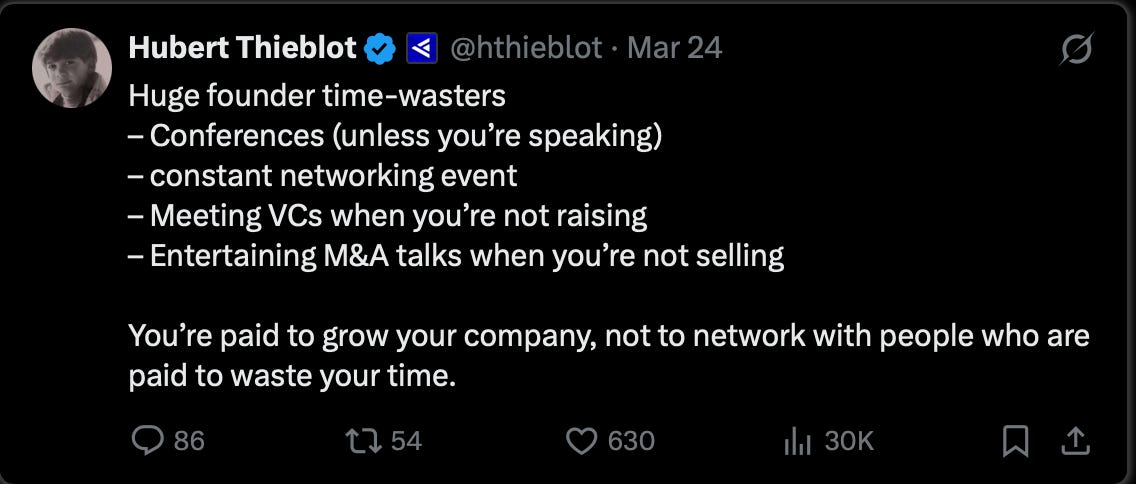
The necessary skepticism, so the piece does not become an ad for events.
The difference usually shows up later, and it is almost boring to describe. People keep seeing each other, or they do not. A chat stays alive, or it does not. Someone is still doing the unglamorous work of gathering the same group again. If none of that happens, it was a night with good lighting.
The internet is going to keep getting better at producing convincing versions of almost everything. That is the point of the technology, and it will not reverse. The side effect is quieter. Once it becomes cheap to appear anywhere, the scarce thing is having actually been somewhere with particular people, long enough that they remember it.
The feed can still introduce you. It cannot do the remembering.