



A few years ago I watched the same pattern repeat across launches. A project would announce points or an airdrop. Activity would surge around it . Wallets flooded in. Dashboards lit up. Then the rewards ended and most of the activity vanished with them.
At first it looked like bad execution or weak product. Over time it became clear the issue sat deeper. The growth had never been rooted in anything durable. It had been rented.
Crypto makes this visible in a way few other markets do. You can watch belief form, spread and sometimes collapse in real time across timelines, chats and order books. The price often arrives later as confirmation rather than the starting point.
Most founders still treat attention as something that appears once the product is ready. In practice the market rarely rewards a story it has never heard. The strongest projects seem to understand this without saying it out loud. They build products and give people a reason to care before the incentives arrive.
Every market runs on belief.
When someone buys a stock, they are buying a story about the future. When a founder raises capital, investors are betting on a version of reality that does not exist yet. Even brands work this way. Nike is not just shoes. Apple is not just hardware. People pay for what those companies represent.
The difference is that most markets hide belief behind something else.
Crypto puts it on display.
You can watch people believe in real time. You can watch conviction spread across timelines, group chats, podcasts, Telegram channels, Discord servers and markets. You can see the exact moment a narrative starts forming. You can also see the moment it breaks.
That feels normal now, but it is actually a very unusual thing. For most of history, belief was difficult to measure. Crypto made it visible.
Think about how a new idea spreads.
Someone discovers something before everyone else. They tell a few friends. Those friends tell more people. The idea starts appearing in conversations. Soon enough, people begin repeating it without remembering where they heard it from.
At some point the narrative becomes bigger than the original source.Only then does the market arrive.
Most people think the market creates the narrative. In reality, the narrative usually arrives first. The price is often just the scoreboard
This is why so many founders misunderstand growth.
They spend years obsessing over product development while treating attention as something that will magically appear later. Sometimes it works. Most of the time it doesn’t.
The market cannot reward a story it has never heard.
The best founders understand this intuitively. They are not simply building products. They are helping people understand why the product matters. That is a completely different skill.
The easiest way to see this is through incentives.
Crypto has spent years trying to manufacture belief through points programs, airdrops, liquidity mining, and referral campaigns. Most of them work surprisingly well in the short term. Activity spikes. Users arrive. Metrics look incredible.
Then the rewards stop.
And a large percentage of the activity disappears with them.
Example : (Optimism Airdrop 5 study showing +4.2pp retention at 30 days decaying to +2.8pp at 60 days, and incentive-heavy approaches reducing genuine retention)
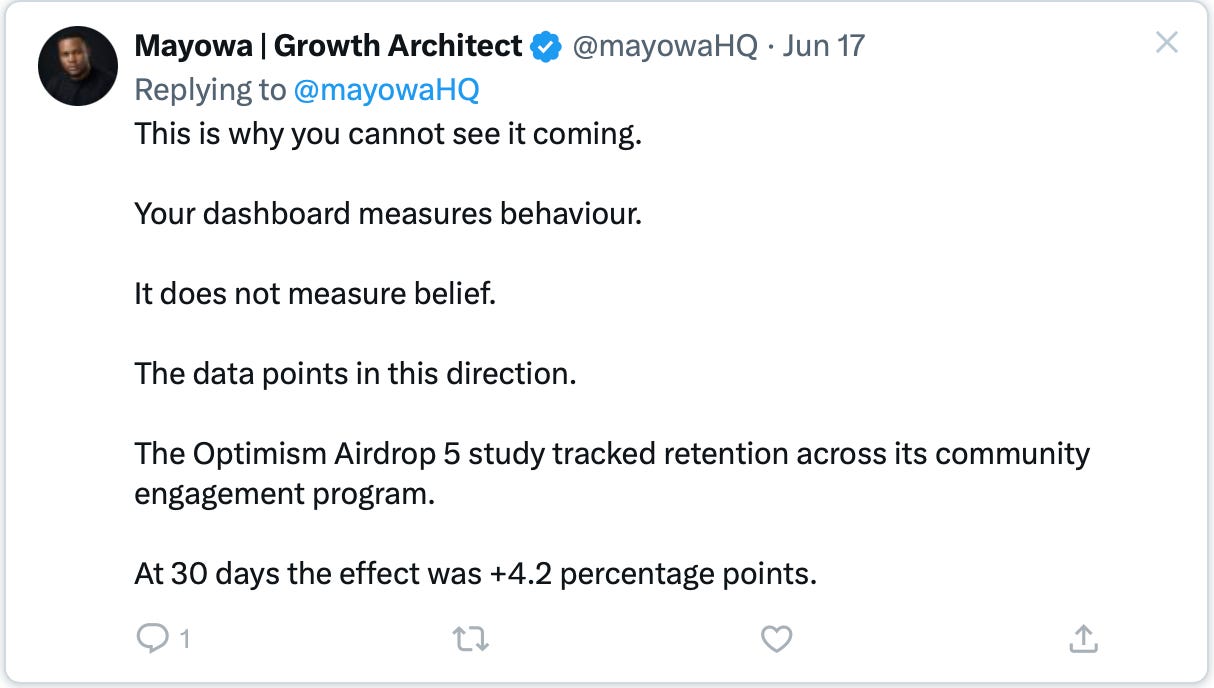
Recent analysis of multiple distributions showed that 50–70% of airdropped tokens were sold within the first 30 days. Many lost the majority of their value inside three months. In several tracked cases, on-chain activity returned close to pre-incentive baselines once the rewards disappeared.
The lesson is not that incentives are bad. The lesson is that incentives and belief are different things. One can imitate the other for a while. Eventually the difference becomes obvious.
The same pattern is starting to appear in attention markets.
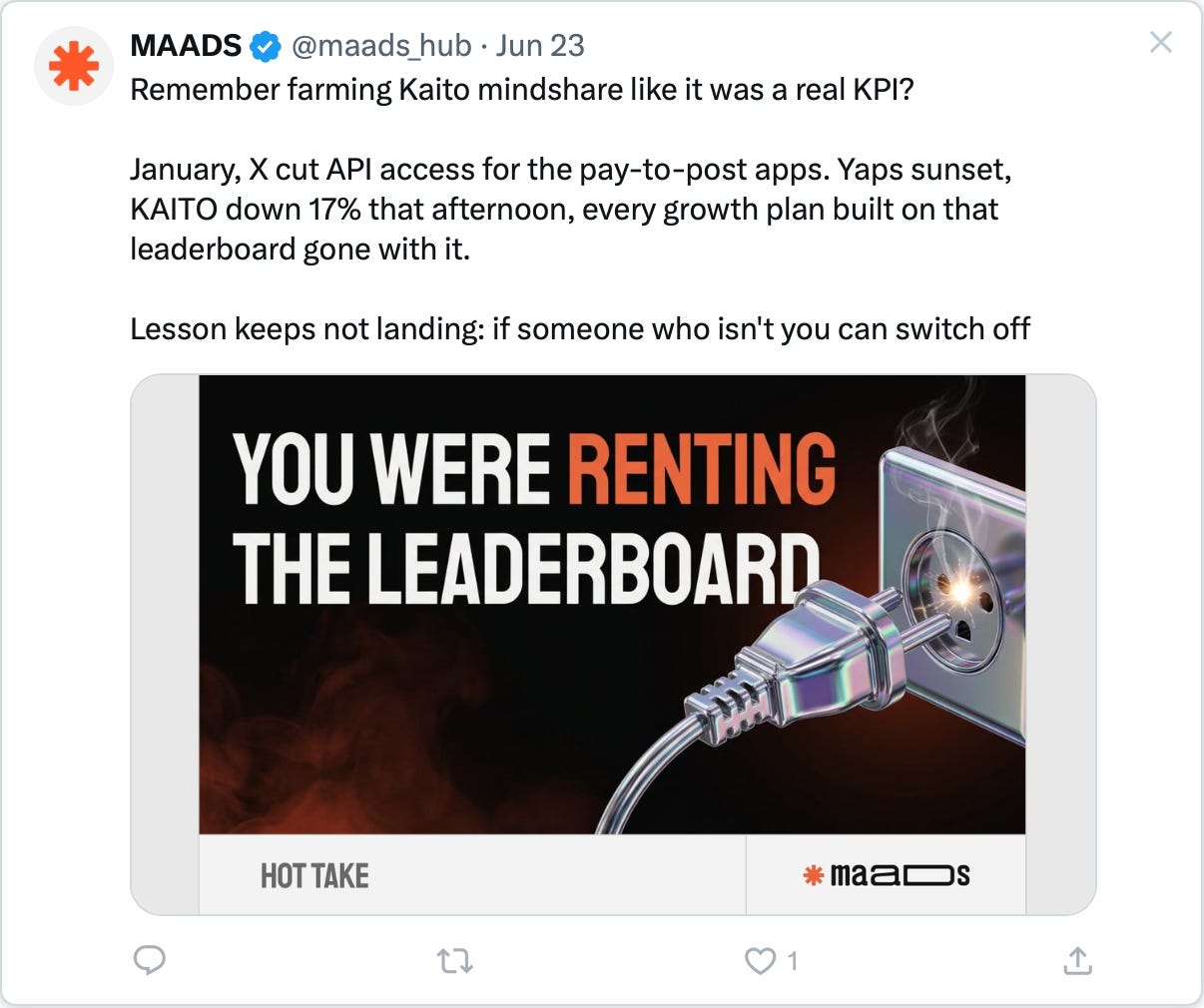
For a period of time, crypto discovered a way to reward people for talking. Entire ecosystems emerged around farming attention. Leaderboards appeared. People optimized their content around rewards. For a while it looked sustainable.
Then the infrastructure changed. The incentives disappeared. Much of the attention disappeared with them.
What looked like community turned out to be compensation. What looked like conviction turned out to be a trade.
The strongest communities in crypto often look different.
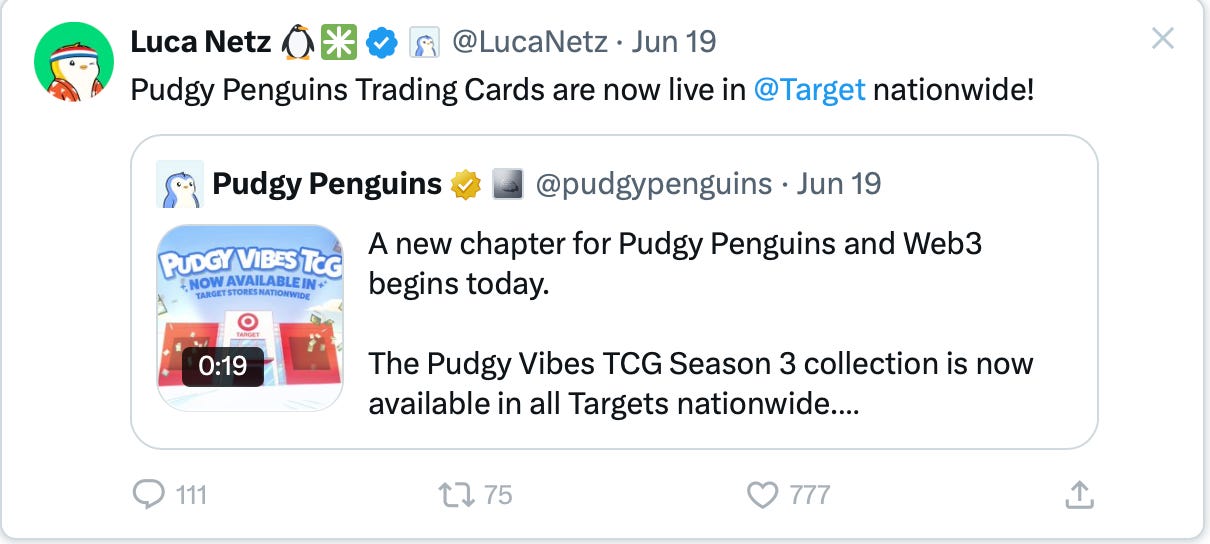
Bitcoin survived multiple crashes before institutions cared. Ethereum spent years attracting developers before most people understood what smart contracts were. More recently, projects like Pudgy Penguins expanded beyond crypto because people genuinely wanted to participate in the story.
None of these examples were purely driven by incentives. People stayed because they believed something interesting was being built. That belief created culture. The culture attracted more people. The network became stronger with time.
I think this is what many founders miss.
Technology and product matters. But none of those things automatically create belief.
Belief has to be earned.
People need a reason to care. They need a reason to tell other people. They need a reason to stay when the market gets boring.
The projects that survive are usually the ones that figure this out. Not because they have the loudest marketing. Not because they spend the most money. Because they give people something worth believing in.
Crypto did not invent belief. Every market has always run on it.
What crypto changed was making belief measurable, tradeable, and visible. For the first time, we can watch conviction move through a network almost in real time.
Sometimes that creates bubbles. Sometimes it creates cults. Sometimes it creates billion-dollar companies.
But it always starts in the same place.
Someone believes something before everyone else does.
The rest is distribution.