


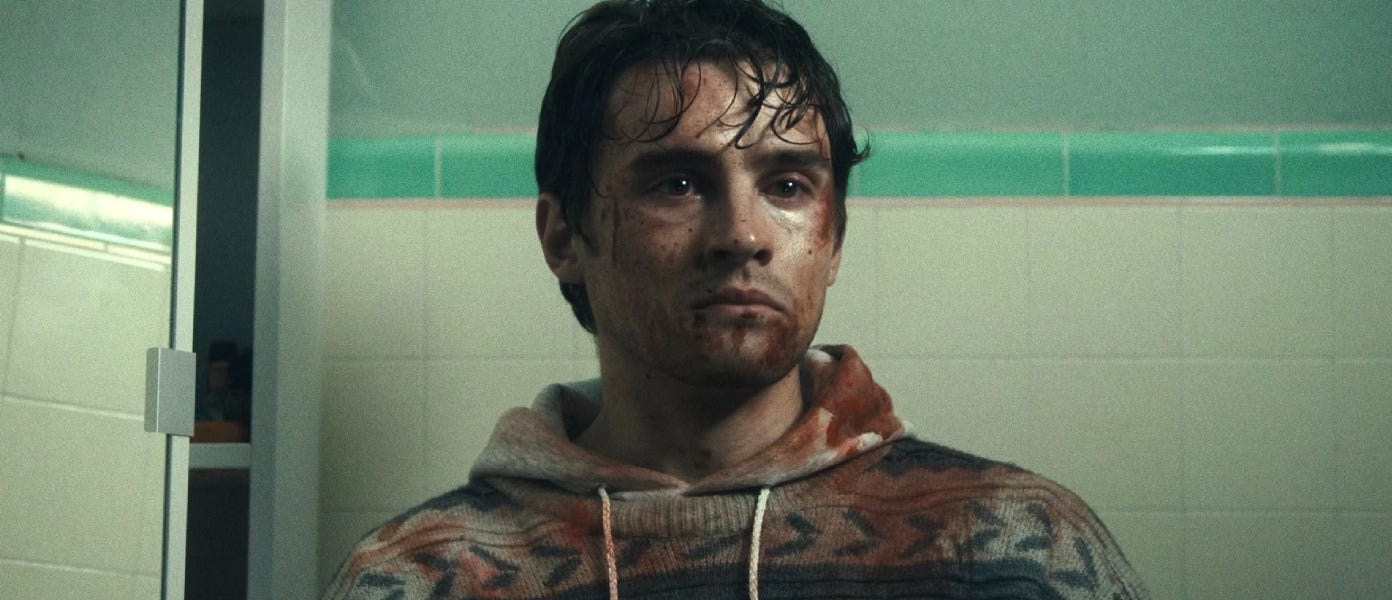
Last night I watched Obsession. Most people walked out of the theater talking about the horror. I walked out thinking about something else entirely.
The movie follows Bear, a lonely young man whose fixation on a girl slowly spirals into darkness. What stayed with me wasn’t just the manipulation or the violence. It was how familiar his loneliness felt. Not the obsession itself, but the quiet emptiness underneath it. The more I thought about it, the more I realized Bear isn’t just a horror character. He is a modern internet character.
Bear wasn’t just chasing a person. He was chasing validation, belonging, attention and the feeling of finally being understood. Psychologists call the intense version of this limerence. It is an obsessive craving often rooted in loneliness, insecurity and emotional isolation. The obsession is rarely about the other person. It is about what they represent. That is what makes the story uncomfortable. Most of us have felt some version of it not always in romance, but with creators we follow, communities we lurk in and careers we chase for status or even the startups we pour our lives into.
We have never been more connected, yet we have never been more alone. The internet was supposed to solve loneliness. In many ways it did. Today we can message someone across the world in seconds, join communities built around any niche imaginable and spend entire days talking to people. And yet the numbers keep rising. We solved communication. We never solved connection.
I spend most of my time around founders, investors and builders, especially in crypto and tech. Many of the sharpest minds I know are also some of the loneliest. They live inside Telegram, Discord, X and internal gc’s. They are constantly communicating. Yet many of them are not deeply connected. The startup world rewards output, not relationships.
Shipping product gets celebrated. Fundraising gets celebrated. Staying chronically online gets celebrated but nobody gets promoted for building strong friendships or a healthy social life. So people optimize for what the system measures and then they wonder why something essential still feels missing.
This is where the story becomes both interesting and unsettling. Everyone talks about technology replacing jobs, but I believe we are looking at the wrong market. The bigger opportunity may lie in companionship, not because people want artificial substitutes, but because they want relationships, and new tools are becoming the most reliable, always available source of one. They never cancel plans, never ghost and never run out of patience. Humans do not always choose what is real, they often choose what is available.
Look at the biggest internet businesses of the last twenty years :
- Google monetized intent.
- Facebook monetized identity.
- Instagram monetized attention.
What if the next wave monetizes loneliness and not in a sinister way, but in the same straightforward economic way every major company has met a fundamental human need?
The loneliness epidemic is no longer just a social issue. It has become a market, and a massive one.
A lot of people still dismiss new forms of digital companionship as a niche product. I think that is a mistake. People said the same thing about social media in its early days. The strongest technologies do not succeed because they are technically impressive. They succeed because they solve emotional problems. Social media solved boredom. Search solved uncertainty.
This new category may soften loneliness or at least make it easier to live with. Those are two very different things.
The real risk is not some dramatic Hollywood scenario. It is quieter and more ordinary. It is substitution. Instead of calling a friend, you talk to the app. Instead of joining a community, you open a chat. Instead of doing the hard, messy work of real relationships, you simulate them. Nothing dramatic breaks overnight. Reality simply becomes slightly less convenient than the alternative, one comforting conversation at a time.
This is why Obsession stayed with me. The horror was not the curse. The horror was what existed before it. It was a lonely person desperate to feel seen, searching for belonging in a world that increasingly struggles to provide it. Bear’s story is not scary because it is extreme. It is scary because it is familiar. Millions of people are already living some version of the first half of it.
We are about to spend the next decade talking about new technologies reshaping work and software. All of that matters. But something deeper is happening underneath. The biggest companies in the coming years may not only help us work. They may also help us feel less alone. Social media captured our attention. The next wave may capture our belonging. And that could quietly become one of the largest markets in technology.
What do you think is this the future we are building or are we sleepwalking into something we will later regret? Btw, I read every reply.