



Lately the crypto corners of the internet feel heavier than usual. You scroll and see the same thing pop up again and again. Someone shares that their team got cut. Another person quietly changes their profile to “Open to work.” Group chats that used to move fast with new launches now slow down into “Anyone hiring?” messages or quiet goodbyes.
It feels like the music stopped. The same space that once handed out remote roles and real upside to people in their early twenties now seems to have far fewer chairs.
Most of the conversation stays inside that same group. People compare their situation to other people who also joined crypto a few years ago. The reference points don’t leave the bubble.
I’ve caught myself doing this too. Every time I opened Twitter, I’d compare myself to founders who had just raised another round or friends who still had jobs. I almost forgot to compare my situation with the rest of my graduating class or with people who took more conventional paths after college.
The Bubble We Compare Ourselves To
What changes when you step outside it for a minute?
Take someone who finished engineering from a regular college in India and took the most common path. They joined an IT services company. Starting pay often lands around ₹6 LPA - 8 LPA depending on the track.

The work is steady. Raises come in small steps. Five or six days a week. Experimenting with something new for six months would mean explaining a gap later. Most people in that spot keep their head down and move forward one appraisal at a time.
Now compare that to someone who took loans and went abroad for a master’s. Total cost easily hits $70k – $80k once tuition and living expenses add up. They finish into a job market where only about 2.6% of early-career postings mention visa sponsorship anymore. Recent college graduates face an unemployment rate around 5.6%. Work authorisation has time limits. Loans need payments. There isn’t much room to say no to the first decent offer or spend months testing new skills.
Crypto paths had a Different Kind of Head Start
Pay often came in dollars or stablecoins instead of local rates. Work could happen from anywhere with just a laptop, long before most companies got comfortable with remote. Conferences and smaller events created connections across countries that later turned into intros or actual work. Some people held tokens that gave them direct ownership in what they helped build. The technology itself sat at the edge of how money and coordination could work online, so people inside it picked up new ways of building faster than most.
Even when things go wrong publicly, the learning happens in the open. That leaves a different kind of proof on a resume or in a portfolio.
When the current slowdown hit, those earlier pieces stayed with people.
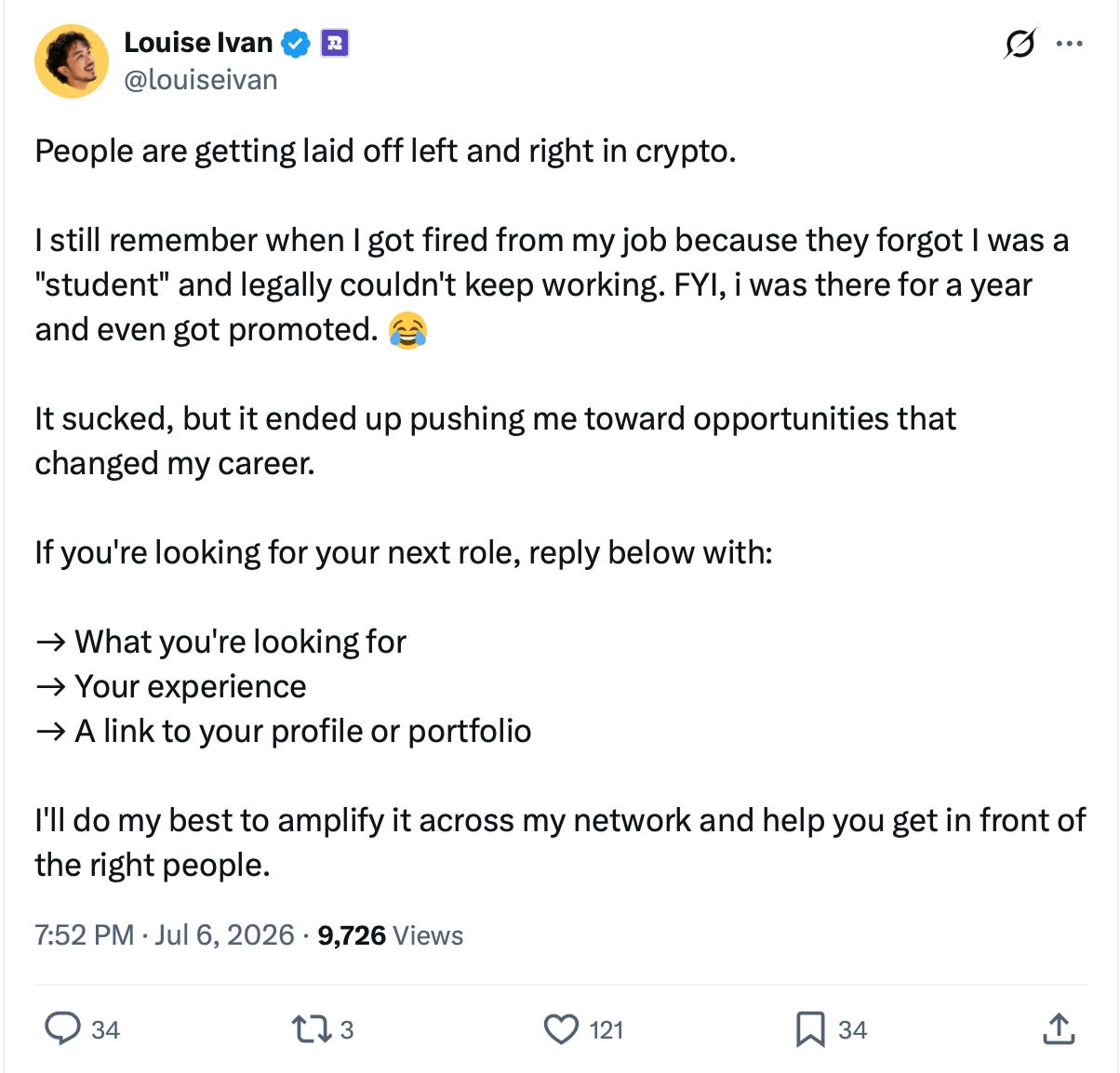
@louiseivan sharing how getting laid off in crypto pushed her toward better opportunities later.
Optionality Is Still an Advantage
Crypto didn’t remove the pain of losing a role. The market right now is genuinely slow. Funding is careful. Companies are leaner.
What it did give earlier was a different starting set of tools.
They often have experience working across time zones and with people they never met in person. They have proof they shipped something real that others actually used. Some have savings or holdings from better periods that give them time. And they tend to treat work as something you can start rather than only wait to be given.
“Losing your job and losing your optionality are two very different things.”
Those things don’t disappear when a company trims headcount.Layoffs have been real. Trackers show nearly 6,000 disclosed roles cut across dozens of companies in 2026 so far, with some bigger organizations trimming 10–40%. Job postings dropped sharply at points. But the people affected usually still carry the earlier advantages.
Most people don’t start with that combination.
The person who started at ₹8 LPA in services usually doesn’t get the same breathing room. The one who spent heavily on a master’s abroad and now faces a shrinking window on their visa has even less.
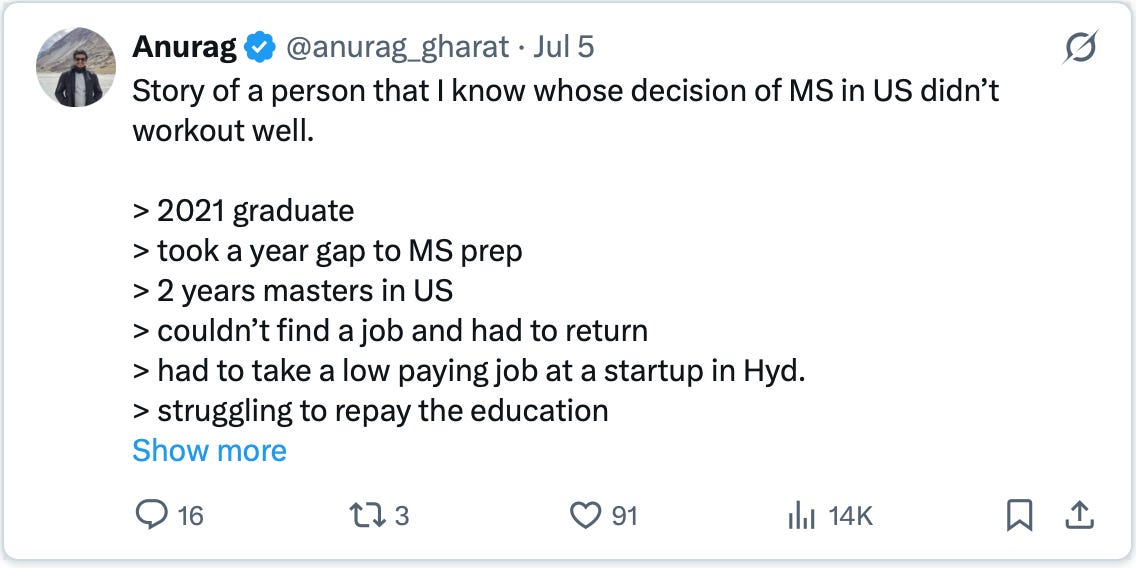
One story that keeps coming up is someone who did the MS route, couldn’t land a role in time, came back, and now works a lower-paying job while still paying off the education loan.
Crypto didn’t remove the pain of losing a role. What it did give earlier was a different starting set of tools. Those things don’t disappear when a company trims headcount. Most people don’t start with that combination.
Even in a slow year, that earlier access leaves more ways to keep moving than the standard paths usually allow.
The frustration is real. The perspective changes when you stop comparing yourself only to other people in crypto.
Most of us are still standing inside the same bubble.
banger
Interesting